Wondering why two luxury homes in North Austin can both look current, yet feel completely different the moment you pull into the driveway? In this part of Central Texas, architectural style is not just about curb appeal. It shapes how a home sits on the lot, how it handles views and outdoor living, and how the floor plan supports your day-to-day life. If you are buying, building, or preparing to sell, understanding the main style categories can help you read a property more clearly and spot real value. Let’s dive in.
Why architectural style matters
In North Austin luxury real estate, style does more than create a first impression. It often signals the materials used, the way the home is organized, and how closely the design responds to the land.
That matters when you are comparing homes that may have similar square footage but very different layouts and finishes. A style-forward home can also be easier to position in the market because buyers tend to respond to a clear architectural identity.
For this area, many luxury homes are not pure textbook examples of one style. Instead, they often blend farmhouse-inspired forms, Hill Country materials, and transitional interiors into polished hybrid designs.
North Austin’s most common luxury styles
The three most useful categories for buyers and sellers in North Austin are modern farmhouse, Hill Country contemporary, and refined traditional. Each one has distinct visual clues, but there is some overlap, especially in newer luxury construction.
Modern farmhouse basics
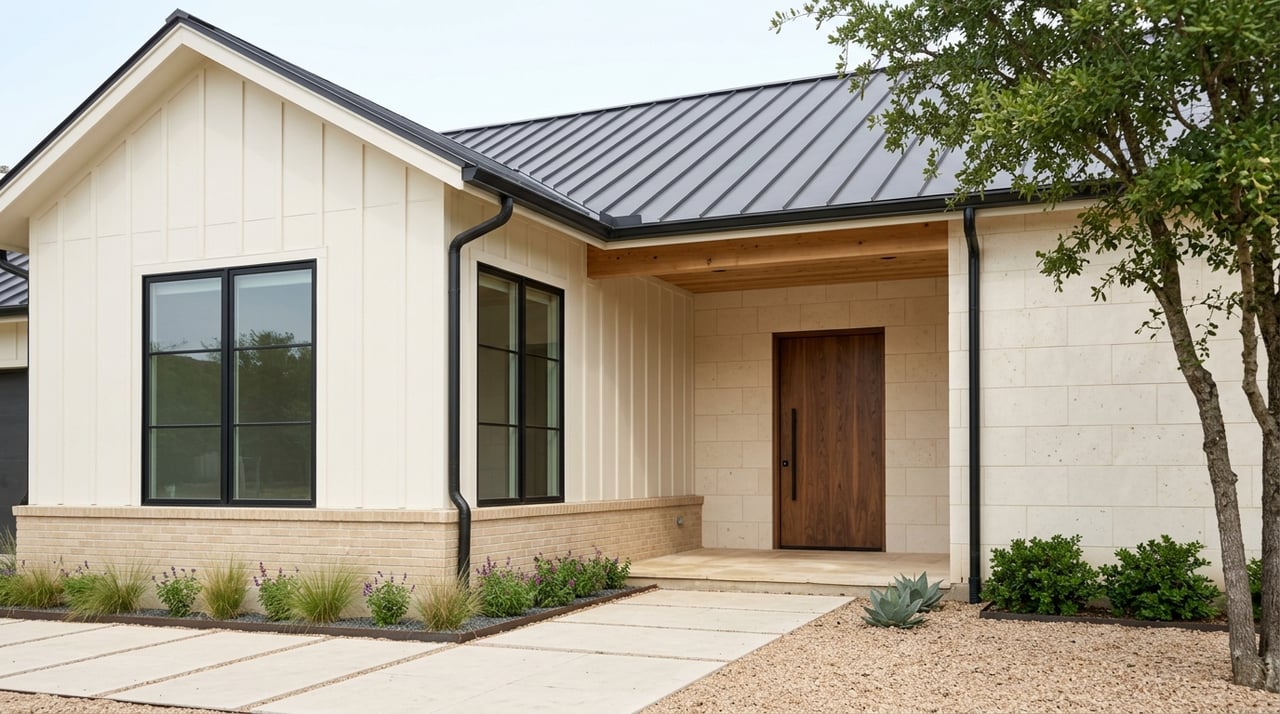
Modern farmhouse usually starts with a familiar farmhouse shape and updates it with cleaner lines. In Austin-area luxury homes, that often means gable forms, tall vertical windows, simple detailing, and a lighter exterior palette.
You will often see vertical board-and-batten siding, painted siding, stone accents, and metal roofing. Some homes also mix in steel-framed doors or courtyard-focused layouts that make the style feel more tailored and upscale.
Inside, the plan typically leans open and social. The kitchen, dining, and family spaces usually flow together, and the home often has strong access to outdoor living areas.
Hill Country contemporary basics
Hill Country contemporary is the most locally specific style in this market. Austin is widely recognized as a center of the Hill Country Modern design language, which draws from Central Texas materials and the regional landscape.
This style commonly features limestone, corrugated or standing-seam metal roofing, steel, cedar or cypress accents, and expansive glass. Broad overhangs and sculptural roof forms are also common, especially on higher-end custom homes.
The key difference is that these homes often feel site-driven. Instead of forcing a generic box onto a lot, the design is usually shaped around views, slope, trees, and outdoor rooms.
Refined traditional basics
Refined traditional is best understood as a polished traditional or transitional luxury style. It keeps the balanced, classic look that many buyers recognize, but it usually softens the formality with a cleaner interior layout.
Typical cues include symmetry, a centered front door, pitched roofs, brick or stone exteriors, porch columns, and more formal trim details. In Central Texas, this style may also use limestone veneer, simpler columns, and compact rectangular forms.
Inside, the luxury version often feels more relaxed than an older formal traditional home. You may still see defined rooms, but larger openings and better kitchen-to-living flow make the layout feel more current.
How to spot each style quickly
If you are touring homes or reviewing listings online, a few visual clues can tell you a lot before you even step inside. The fastest tells are the roofline, window rhythm, material palette, and how the home sits on the lot.
Look at the roofline
Roof shape is one of the easiest clues to read.
- Modern farmhouse often shows prominent gables
- Hill Country contemporary usually looks lower and more horizontal
- Refined traditional often uses balanced pitched roof forms with a more classic profile
Study the materials
Material choices say a lot about the architectural intent.
- Modern farmhouse tends to feel more painted and siding-forward
- Hill Country contemporary leans more stone-, metal-, and glass-forward
- Refined traditional usually reads as brick- or stone-forward with more trim detail
Notice the lot relationship
The way a home meets the land often separates styles more clearly than interior decor does.
Hill Country contemporary homes frequently feel closely tied to the site, especially on lots with views or natural grade changes. Modern farmhouse homes often present as more composed and shape-driven, while refined traditional homes usually emphasize symmetry and a more formal front-facing presence.
Floor plans behind the style
Exterior style matters, but floor-plan language is often what buyers live with every day. In North Austin luxury homes, several layout patterns show up again and again across these styles.
Open gathering spaces
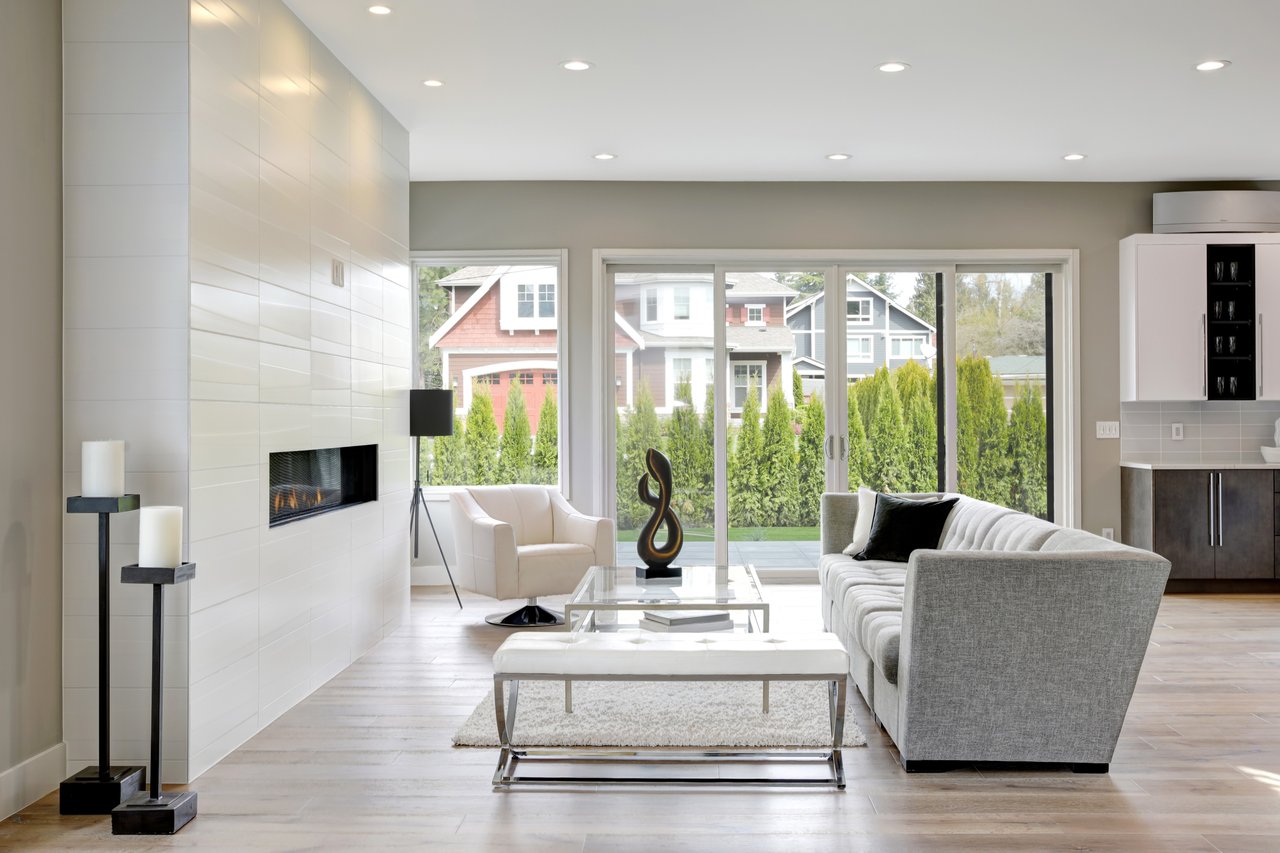
Open-concept living is common across all three styles, especially in newer homes. The biggest difference is how open the plan feels and how formal the transitions are between spaces.
Modern farmhouse and refined traditional homes often use open kitchens and connected family areas, but refined traditional layouts may preserve more room definition. Hill Country contemporary homes often use open space to direct your eye outward toward glass, views, or a covered outdoor room.
Courtyards and outdoor rooms
Covered outdoor living areas and central courtyards are especially important in luxury homes here. They support indoor-outdoor flow and create shaded gathering space that fits the Central Texas climate.
Modern farmhouse plans may use a courtyard as a central organizing feature. Transitional and refined traditional layouts can also use covered outdoor rooms as a major part of how the home lives.
Formal versus flexible rooms
Traditional floor plans are more likely to separate rooms by purpose. That can mean a more distinct office, dining room, or sitting room.
By contrast, modern farmhouse and Hill Country contemporary homes often feel more flexible. They tend to prioritize sightlines, shared gathering areas, and easier movement between interior and exterior spaces.
Hill Country contemporary vs modern farmhouse
This is one of the most common points of confusion for buyers in North Austin. Both styles can look clean and current, and both may include metal roofing, stone, and generous windows.
The difference usually comes down to overall composition. Hill Country contemporary generally feels lower, more horizontal, and more connected to the site, while modern farmhouse more often reads as gabled, painted, and siding-forward.
If a home seems designed around the land, view, and long rooflines, it is likely closer to Hill Country contemporary. If it feels rooted in a farmhouse silhouette with simplified details and a lighter material palette, it is likely modern farmhouse.
Where refined traditional fits in
Refined traditional is often the bridge style for buyers who want something timeless but not overly formal. It can appeal to people who appreciate classic symmetry and familiar materials, but still want a more updated way of living.
That is why the term overlaps with transitional design. They are not exactly the same, but they are close, especially when the exterior feels classic and the interior opens up in a more modern way.
In practical terms, refined traditional works well when you want balance. It can offer a polished front elevation and more defined spaces, while still giving you larger openings, improved flow, and a stronger connection to the backyard.
Which style works best for a view lot?
If you are shopping for a property with slope, mature trees, or long-range views, Hill Country contemporary often has the strongest natural fit. The style is commonly organized around the land, with large windows, low horizontal forms, and layouts that frame the landscape.
That does not mean the other styles cannot work on a premium lot. It simply means Hill Country contemporary is usually the most site-responsive of the group.
For buyers, that can translate into a home that feels more intentional from room to room. For sellers, it can also make the property’s setting easier to showcase when the architecture and land work together.
What this means when you buy or sell
When you understand a home’s architectural language, you can evaluate it more clearly. You are not just reacting to finishes. You are reading the structure, layout, materials, and how the home fits its lot.
For buyers, that helps you compare properties on more than surface-level style. For sellers, it helps shape pricing, presentation, and the story your home tells in the market.
This is especially important in North Austin’s luxury segment, where buyers often notice design integrity and plan quality quickly. A home with a clear architectural identity tends to stand out more than one that mixes details without a strong overall direction.
With Bryan Thomas Properties, that conversation goes deeper than aesthetics alone. Bryan’s hands-on construction and project management experience helps clients look at style through both a design and practicality lens, whether you are evaluating a custom build, planning a purchase, or preparing a home for market.
If you want expert guidance on buying, building, or selling a luxury home in the North Austin corridor, connect with Bryan Thomas Properties.
FAQs
How can you identify Hill Country contemporary homes in North Austin?
- Look for a lower, more horizontal form, limestone or other stone-forward materials, metal roofing, expansive glass, and a design that appears shaped by the lot, views, or landscape.
What defines a modern farmhouse luxury home in North Austin?
- Common signs include gable roof forms, vertical board-and-batten or painted siding, tall vertical windows, clean detailing, stone accents, and an open interior with strong outdoor access.
Is refined traditional the same as transitional architecture?
- Not exactly, but they are closely related. Refined traditional is a practical market term for homes that keep classic symmetry and traditional cues while using a cleaner, more current interior plan.
Which North Austin luxury home style usually fits a view lot best?
- Hill Country contemporary usually fits view lots especially well because the architecture is often organized around slope, trees, and long views.
What visual clues matter most when comparing luxury home styles?
- The most useful clues are the roofline, window rhythm, material palette, and how the home sits on the lot.
Why does architectural style matter when buying or selling a luxury home?
- Style often reflects layout, materials, site response, and overall design clarity, all of which can affect daily livability and how a home is perceived in the market.