If you want a home that feels easier to own without giving up style or location, lock-and-leave living in Round Rock deserves a closer look. Many buyers are trying to balance busy schedules, travel, and homeownership without taking on every exterior chore themselves. The good news is that Round Rock offers real low-maintenance housing options, but the details matter more than the label on the listing. Let’s dive in.
Why lock-and-leave appeals in Round Rock
Round Rock is a fast-growing city with an estimated population of 142,601 in May 2026, up from 119,468 in the 2020 Census. As the city has grown, its housing mix has expanded too, including town homes, patio homes, condos, upscale homes, and starter homes. That variety gives you more ways to find a home that fits your schedule and maintenance preferences.
Still, low-maintenance attached housing is only part of the local picture. Round Rock’s 2023-2024 annual report says the city has 4,298 missing-middle units, equal to 8.2% of housing stock, and 1,659 of those are townhouses. In other words, townhomes are a real product type here, but they remain a smaller slice of the overall market.
What lock-and-leave really means
In everyday real estate language, lock-and-leave usually describes a home that lets you travel or manage a busy routine with fewer exterior responsibilities. That often means an HOA or condo association handles at least some of the outside maintenance or common-area upkeep. It sounds simple, but the actual arrangement can vary quite a bit from one property to the next.
That is why you should treat lock-and-leave as a lifestyle description, not a legal category. The true answer comes from the deed, resale documents, governing documents, and property type. Before you assume what is covered, you need to verify exactly what you own and what the association maintains.
Townhomes in Round Rock
How the city defines townhouses
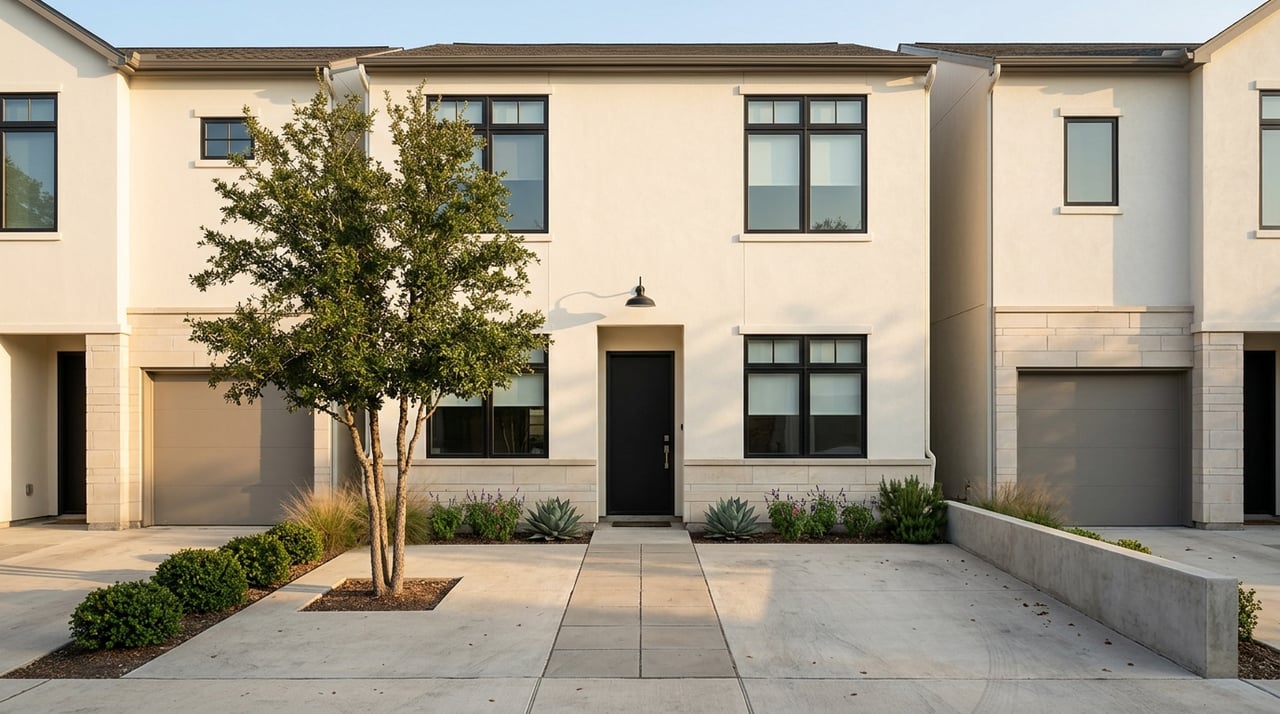
Round Rock planning materials define townhouses as residential structures with three or more dwelling units sharing one or more walls. Each unit runs from ground to roof and opens to the outside at the front and rear. That gives you a more specific local definition than the broad way the term is often used in marketing.
The city also says townhouses may be developed on a single-lot or common-lot basis. They are permitted in TH, MF-1, MF-2, SR, and MU-2 zoning districts. For you as a buyer, that means two homes that look similar from the street may have different ownership and maintenance structures.
What to verify before you buy a townhome
A townhome may be fee-simple, or it may be part of a different ownership setup that affects what you are responsible for. Exterior appearance alone does not tell you enough. You need to confirm the ownership structure from the deed and the governing documents.
When reviewing a Round Rock townhome, focus on questions like these:
- Do you own the land under the home in fee simple?
- Is the building on a single lot or common lot?
- Which exterior items are owner responsibilities?
- Which items does the HOA maintain?
- Are there assessments, transfer rules, or a right of first refusal?
- Is the home in a standard zoning district or a PUD with custom rules?
Patio homes in Round Rock
Patio home is a market term
Patio homes are part of Round Rock’s housing mix, but the term works more as a market description than a separate city zoning category. The city’s FY2025-2026 budget book lists patio homes among local housing choices, and city survey material uses a patio home as an example of a small single-family home. That tells you the term is recognized locally, even if it is not a standalone zoning label.
Round Rock’s comprehensive plan includes a related concept called single-family garden style residential. This describes single-family homes arranged around private access drives and resident amenities. In practical terms, some homes marketed as patio homes may function like smaller detached homes with a more managed setting.
What buyers should expect
Because patio home is a descriptive term, not a strict legal category, one patio home community can differ a lot from another. Some may offer more HOA involvement in lawn or common-area care, while others function much more like traditional single-family ownership. The only reliable way to know is to review the recorded documents for that specific property.
This is where local, technical guidance matters. A polished exterior and low-maintenance branding can be appealing, but your real cost and convenience depend on what the documents actually assign to you versus the association.
How condos differ from townhomes
Condos are a separate property form under Texas practice, and that distinction is important. Texas uses a separate TREC Residential Condominium Contract for condo resales, and that contract applies to the resale of a condominium unit, not a property where the seller owns fee-simple title to the land beneath the unit. So if a home looks like a townhome, it still may legally be a condo.
Under Texas Property Code Section 82.107, condo associations generally maintain, repair, and replace common elements. Unit owners are typically responsible for the unit itself and certain unit-only utility equipment and windows or doors unless the declaration says otherwise. That usually creates a clearer division of maintenance duties than you will find in many non-condo communities.
HOA and association details matter most
Review the resale certificate carefully
For homes subject to mandatory HOA membership in Texas, TREC uses a subdivision information and resale-certificate form. That form covers important details such as assessments, judgments, and right of first refusal. These are not minor line items. They can shape your monthly costs, resale flexibility, and day-to-day ownership experience.
If your goal is true lock-and-leave convenience, this review step is essential. A community may reduce your exterior workload, but it may also come with obligations that are easy to overlook if you focus only on the floor plan or finish level.
Confirm who maintains what
One of the biggest buyer mistakes is assuming that all exterior maintenance belongs to the association. In some communities, the HOA may cover shared spaces, select landscaping, or limited exterior components. In others, owners still carry meaningful responsibility for roofs, walls, private yards, or utility-related items.
Before you move forward, ask for clear answers about:
- Roof maintenance
- Exterior walls and siding
- Front and rear landscaping
- Irrigation systems
- Fences and gates
- Driveways or private access areas
- Windows and doors
- Insurance responsibilities tied to exterior components
Zoning and PUD rules can affect ownership
Round Rock’s Development Code governs subdivision platting, zoning, site plan review, permitting, landscaping and tree protection, signs, and technical building codes. The city also recommends zoning verification through CityView or a zoning verification letter. If you are comparing newer townhome or infill communities, this can help you understand how the property was approved and what rules may apply.
You should also pay close attention to planned unit developments, or PUDs. The city notes that PUDs are site-specific zoning districts and that their agreements transfer to later owners. That matters because a property in a PUD may operate under custom rules that differ from a typical zoning district.
Round Rock’s PUD list includes townhome-related entries such as Main Street Townhomes, which makes this more than a technical footnote. If you are buying for simplicity, it is smart to confirm whether the community follows standard zoning or a PUD structure with site-specific requirements.
Is lock-and-leave right for you?
Lock-and-leave living can be a strong fit if you want less hands-on upkeep, easier travel, or a more streamlined routine. It can also appeal if you value a well-kept setting and would rather trade some direct maintenance control for shared management. In Round Rock, that opportunity is real, especially in townhome, condo, and patio-home style communities.
At the same time, convenience always comes with structure. The balance between owner responsibility and association responsibility is what truly defines the experience. The best purchase is not the one with the most attractive label. It is the one where the ownership form, documents, and community rules match how you actually want to live.
If you are considering a lock-and-leave home in Round Rock, working with an advisor who understands both property documents and construction details can help you avoid expensive surprises. From ownership structure to exterior maintenance obligations, the fine print matters. When you want thoughtful guidance on buying, selling, or evaluating low-maintenance homes in Williamson County, connect with Bryan Thomas Properties.
FAQs
What does lock-and-leave mean for a Round Rock home?
- In Round Rock, lock-and-leave usually means an HOA or condo association takes on at least some exterior or common-area maintenance, but the exact responsibilities must be verified in the deed and governing documents.
How are Round Rock townhomes different from condos?
- A Round Rock townhome may be fee-simple or part of another ownership structure, while a condo is a separate legal property form in Texas with its own resale contract and a clearer statutory division of association versus unit-owner maintenance.
Is a patio home a separate zoning type in Round Rock?
- No. Based on city materials, patio home is best treated as a descriptive market term in Round Rock rather than a separate zoning category.
What should you review before buying a lock-and-leave property in Round Rock?
- You should review the deed, governing documents, resale certificate, maintenance responsibilities, assessments, right of first refusal, and whether the property is in a standard zoning district or a PUD.
Are townhomes common in Round Rock?
- Townhomes are a real part of the local market, but they are still a minority housing type. Round Rock’s 2023-2024 annual report counted 1,659 townhouses within 4,298 missing-middle units, or 8.2% of total housing stock.